How to Choose Good Fats: A Guide to the Best Fats
Most women were taught to fear fat, to count calories, or to buy whatever was labeled “low-fat,” but true nourishment comes from real, traditional fats — and learning how to choose good fats is one of the easiest ways to support your hormones, energy, and overall health. But real nourishment comes from real fats. The kinds your […]
Updated March 31, 2026
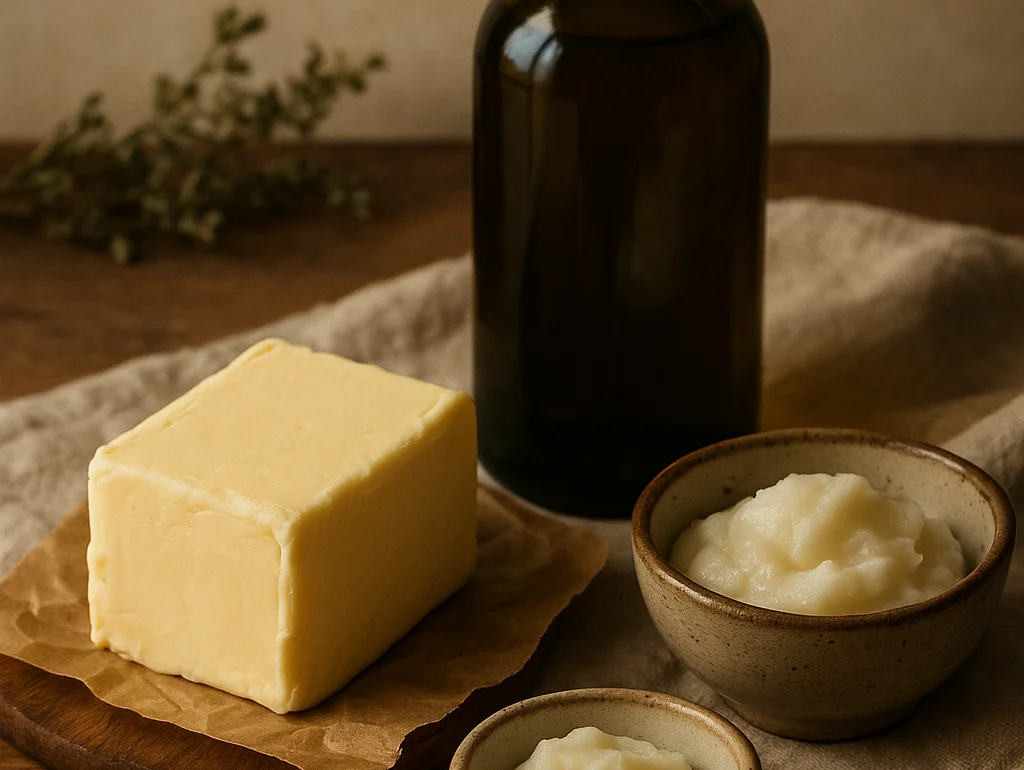
Most women were taught to fear fat, to count calories, or to buy whatever was labeled “low-fat,” but true nourishment comes from real, traditional fats — and learning how to choose good fats is one of the easiest ways to support your hormones, energy, and overall health.
But real nourishment comes from real fats. The kinds your great-grandmother cooked with. The kinds your hormones recognize.
The challenge? Not all fats are created equal. And not all labels tell the truth.
Here’s a simple guide to choosing the best fats — the ones that truly support your health, your hormones, and your home cooking.
1. Butter
Understanding sourcing is a foundational part of knowing how to choose good fats that support hormones and metabolism. Real butter is one of the most nutrient-rich fats you can bring back into your kitchen.
What to look for:
- Raw, organic, grass-fed (ideal, but not always available). A wesbite to find raw milk is Realmilk.com
- Grass-fed store-bought options like Kerrygold or Costco brand
- Short ingredient list (cream + salt, or cream alone)
Butter from grass-fed cows contains naturally higher levels of:
- Vitamins A, D, E, K2
- Conjugated linoleic acid (CLA)
- Omega-3 fatty acids
- Butyrate (amazing for gut health)
Choosing Dairy That’s Free From Added Hormones
This part is simple but important.
Even though the U.S. legally allows rBGH/rBST (synthetic growth hormones) in dairy production, you can choose brands that voluntarily avoid it. Most high-quality butters already do.
How to shop hormone-conscious dairy:
- Look for labels that say “No rBST” or “No added hormones.”
- Grass-fed dairy is naturally lower in hormone residues because the cows are not pushed for high-yield milk production.
- Organic dairy automatically prohibits synthetic hormones.
- Smaller, local, or raw-dairy farms almost never use added hormones because the cows produce naturally at their own rate.
This isn’t about being scared of food — it’s about choosing dairy that’s as close to the earth and the animal’s natural rhythm as possible.
It tastes better. It feels better. It supports your hormones better.
2. Extra Virgin Olive Oil
Olive oil is one of the most adulterated oils on grocery shelves, so choosing a high-quality one matters. When you’re learning how to choose good fats, this is the one most people get wrong simply because labels can be misleading.
What to Look For:
Single origin
Avoid blends from multiple countries — single-origin oils offer better purity, consistent flavor, and traceability.
First cold pressed
This ensures the oil comes from the first extraction with no heat or chemicals, preserving antioxidants and nutrients that support hormone and heart health.
Harvest date listed
Good producers proudly include a harvest date. Choose oils harvested within the last year and avoid bottles that only list an expiration date.
Dark glass bottle
Olive oil is sensitive to light and heat. Dark green or amber bottles protect it from oxidation and keep the flavor and nutrients intact. Avoid clear or plastic bottles.
A peppery, bright finish usually signals freshness. Flat or greasy-tasting oils are often old or blended with cheaper seed oils.
I have another blog post on more details on finding a good olive oil here.
In summary:
When choosing olive oil, look for single origin, first cold pressed, a recent harvest date, and a dark glass bottle to ensure you’re getting a real, high-quality fat.
3. Avocado Oil
This is the one most people get wrong — not your fault, the industry is messy.
Here’s the truth:
Most avocado oils on shelves are cut with cheaper oils (like soybean or canola) or are already rancid by the time you buy them.
The only two avocado oils I’ve found that are actually pure:
- Chosen Foods 100% Avocado Oil (the real one, not the blends)
- Avohaus (extremely pure and small-batch)
If it doesn’t taste buttery and mild, or if the color looks too pale or too neon, it’s not the real thing.
Why it matters:
Pure avocado oil has a high smoke point and a beautiful fatty acid profile — perfect for sautéing, roasting, or making homemade mayo.
4. Tallow & Lard
These are the forgotten heroes of traditional cooking.
What to look for:
- Grass-fed tallow
- Pasture-raised pork lard
- Naturally rendered, without artificial additives
Why they matter:
These fats are stable, nourishing, and incredibly versatile.
They handle high heat beautifully, support hormone health, and bring that grounded, old-world nourishment back into the kitchen.
Tallow is especially amazing for:
- Roasting potatoes
- Searing meats
- Making crispiest vegetables
- Skincare (yes — your face loves it)
Lard shines in:
- Baking
- Frying
- Anything that needs that soft, flaky texture
The Bottom Line: Keep It Real
Once you know how to choose good fats, it becomes easy to build meals that are nourishing, stable, and rooted in real-food traditions.
Just return to what’s real, what’s traditional, and what your body recognizes:
- Butter from grass-fed cows
- True extra virgin olive oil
- Pure avocado oil (from brands you trust)
- Natural animal fats like tallow and lard
These are the fats that support your hormones, your skin, your metabolism, and the kind of home cooking that feels both nostalgic and nourishing.
If you’re interested in returning to the kind of simple, nourishing eating women once practiced naturally, I go much deeper into this in my guide Effortlessly Thin: The Lost Rhythms of Women Who Never Dieted. It explores the quiet habits and daily rhythms that allow women to eat well, enjoy real food, and stay balanced without dieting.
Related Reading
Culture
Homemaking is Worth Preparing For
Most women will become mothers. Despite what modern culture often suggests, many women still hope for marriage,…
Character
Homemaking is The Profession Modern Society Forgot
There is something strange about the way we prepare young women for adulthood. If a girl dreams of becoming a doctor,…
Homemaking
What Children Actually Remember About Their Childhood Home
My brother and I are both unusually nostalgic when it comes to our childhood. When we talk about our favorite memories,…