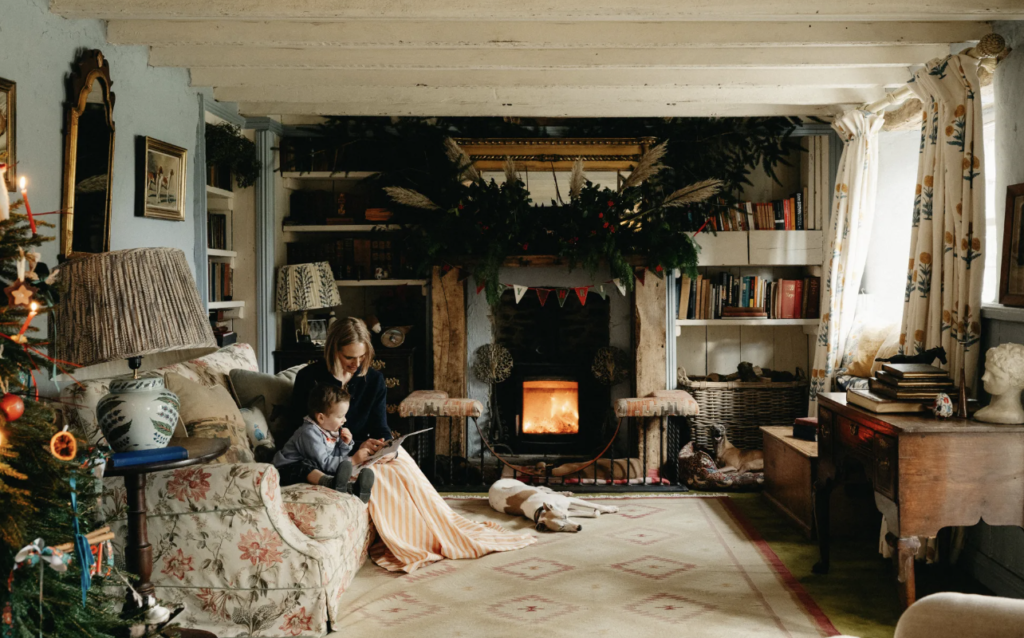
There is a quiet and rare difference you feel the moment you step into certain homes. It is not always something you can immediately name, but it is unmistakable. They carry a certain depth. A kind of beauty even within imperfection. They feel settled and lived-in, shaped by the people inside them rather than arranged for appearance. Nothing is trying too hard, and because of that, everything feels more beautiful.
By contrast, most newer homes today—no matter how beautiful—can feel slightly untethered. Clean, finished, and often impressive, but lacking a certain depth that is harder to define. Many modern homes are designed all at once, according to how they are meant to appear. The difference is not simply aesthetic. It is rooted in an entirely different understanding of what a home is meant to be.
A Home That Is Formed, Not Finished
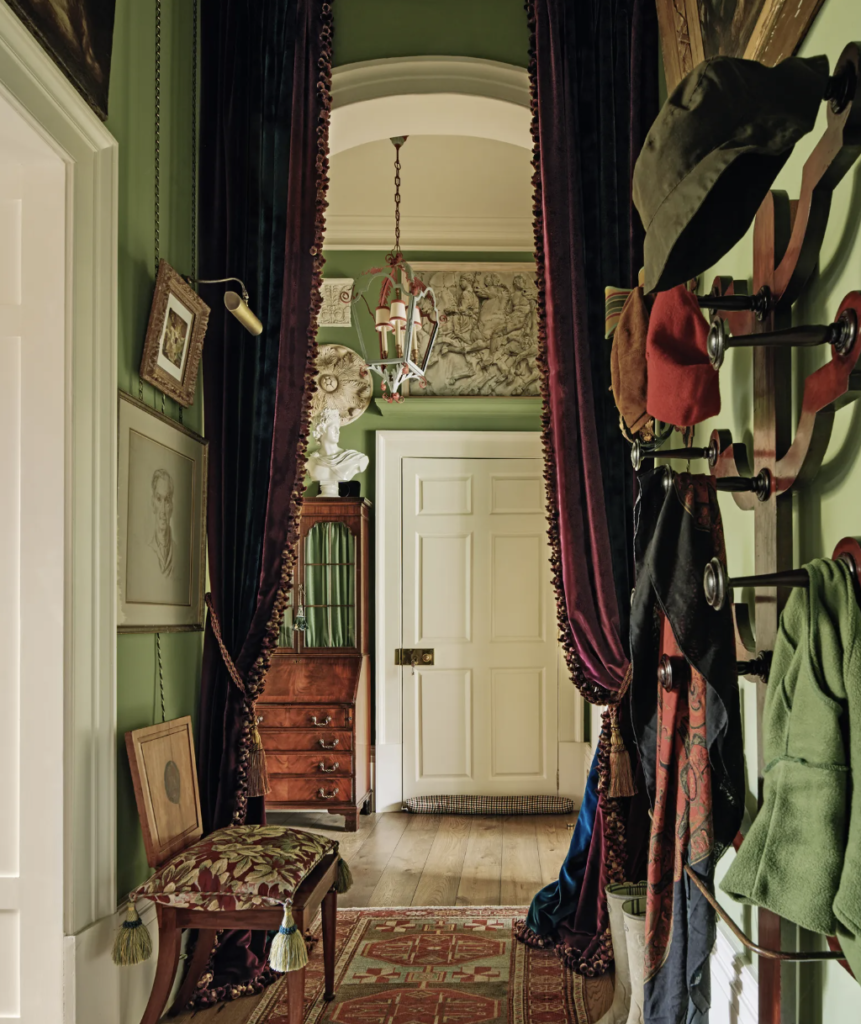
A timeless home is rarely finished all at once. It is formed gradually, shaped by the passage of time rather than the pressure to complete it. Furniture is added slowly, often inherited or discovered rather than purchased in a single sweep. Materials soften with age. Spaces adjust as life unfolds.
There is no urgency to make everything cohesive from the beginning. In fact, cohesion often comes as a result of time itself, rather than careful planning. Things are chosen over time, from a vast variety of places, rather than a few popular stores.
Many modern homes are approached as finished projects. Rooms are designed in a single phase, with matching furniture, coordinated palettes, and a clear end point in mind. While this creates a sense of order, it can also result in spaces that feel static—complete, but not evolving.
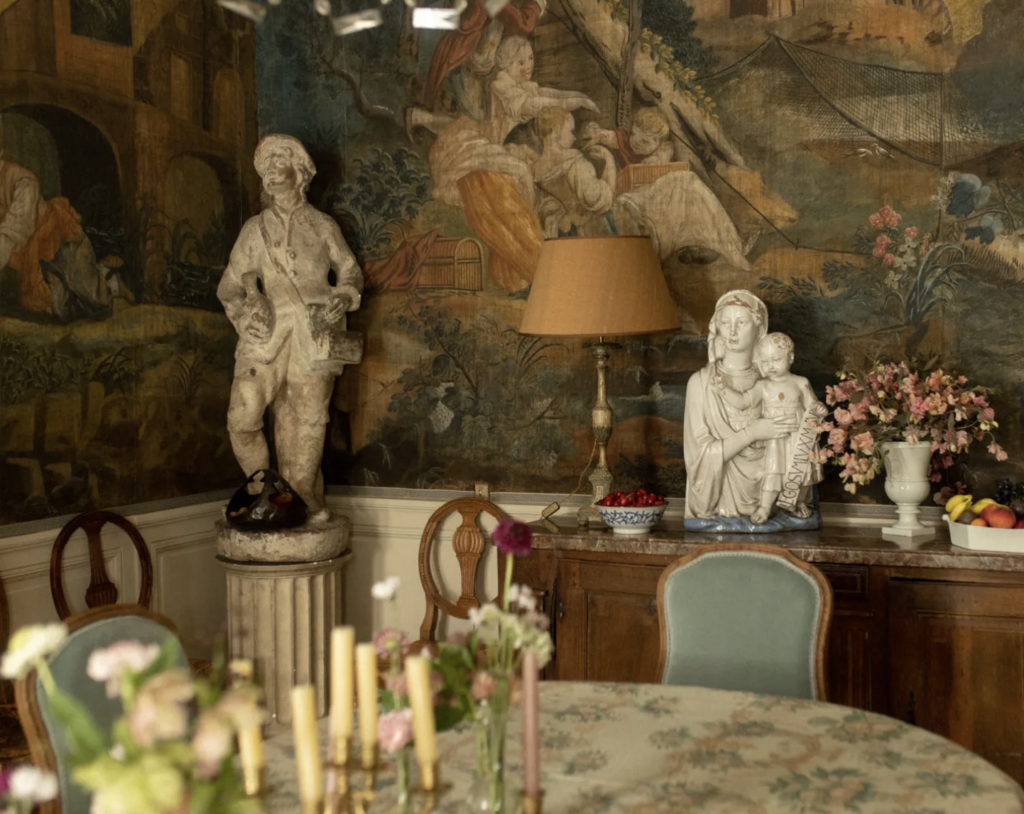
A home that is formed over time carries a kind of quiet richness that cannot be replicated all at once. It reflects not only taste, but history. This is something that many old european homes capture.
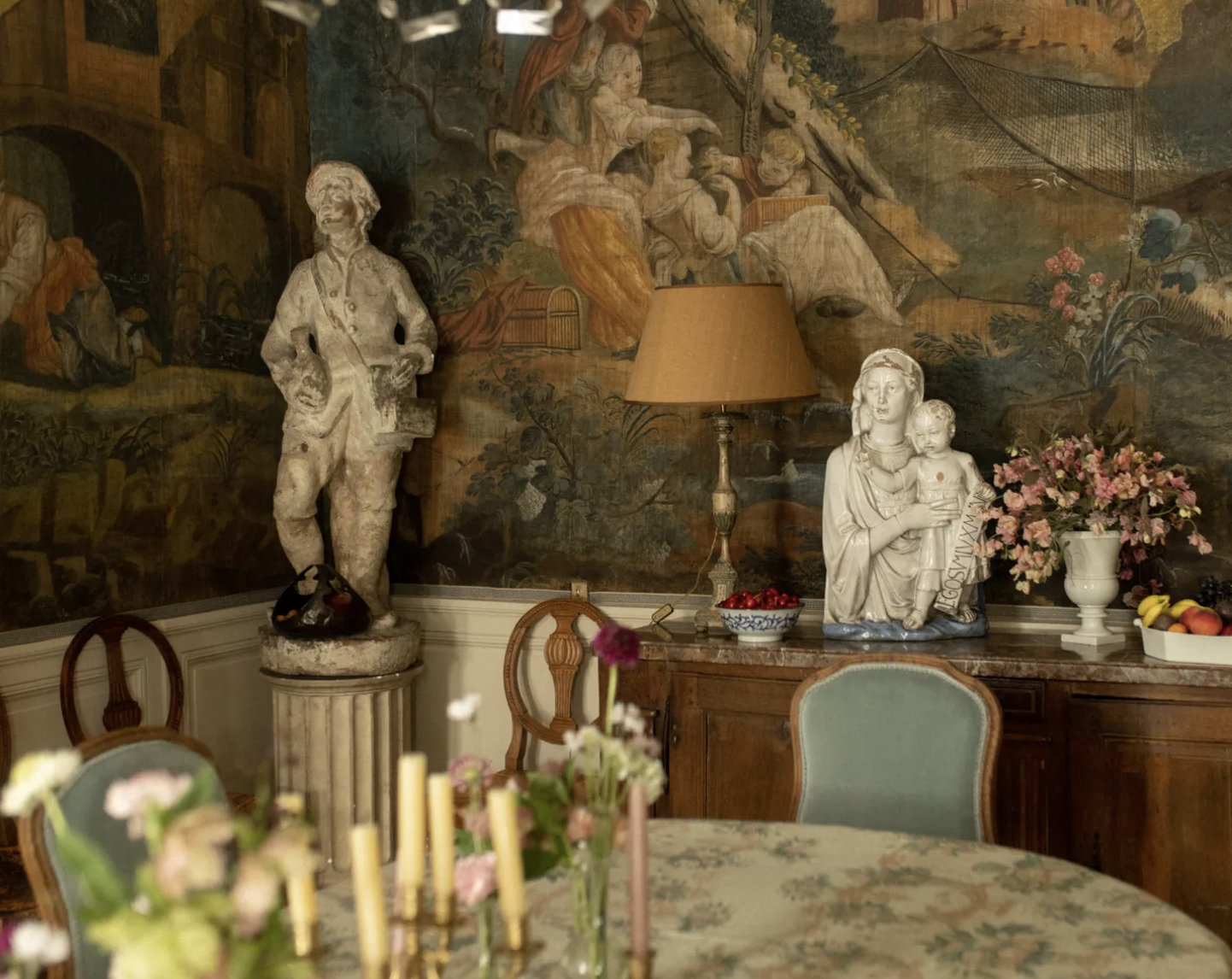
In the photo below, notice the different pieces that make this room. Each item seems to have it’s own unique story, rather than “I got this all at a department store.” There’s a comfort and a romantic mystery in this design.

The Weight of Real Materials
Another distinction lies in what a home is made of. Timeless interiors tend to begin with materials that possess a certain honesty—stone, wood, plaster, linen. These materials are not chosen because they are flawless, but because they are real. They carry weight, texture, and variation. They age, and in aging, they become more beautiful. In many places in France and Italy you see these materials used in the older homes.
Walls are not always perfectly smooth. Wood is not always sealed to a uniform finish. Fabrics crease and soften. Nothing feels overly processed or artificial.
In many modern homes, the priority is often visual consistency. Surfaces are engineered to appear perfect. Materials are selected for uniformity, sometimes at the expense of character and longevity. The result is a space that looks polished, but can feel slightly cold and not meant to last generations.
The Acceptance of Imperfection
Perhaps the most meaningful difference is the way imperfection is understood.
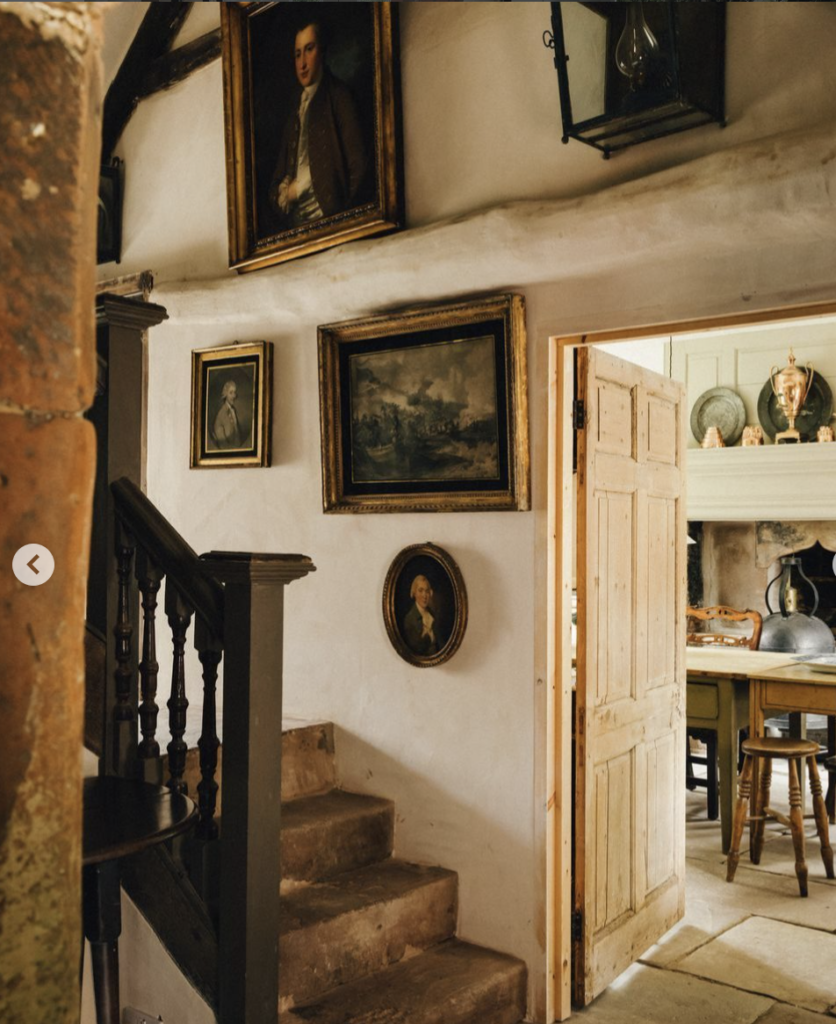
In homes that feel timeless, signs of wear are not treated as problems to be corrected. A worn table edge, a faded textile, a slightly uneven wall—these are not failures of maintenance, but evidence of use. They suggest that a home has been lived in fully, rather than preserved carefully.
They also do not feel the need to balance everything. In many modern homes, there is an effort to keep proportions even—to match scale, to distribute visual weight carefully, to make everything feel symmetrical. But in older interiors there are often small imbalances. A larger piece beside something more delicate. A corner that feels slightly unexpected. And yet, rather than feeling off, it works. The space feels more natural, as though it has been arranged over time rather than adjusted for effect.
Many modern interiors move in the opposite direction. There is a tendency to maintain a sense of perfection, to keep surfaces unmarked and spaces controlled. While this can create a sense of order, it can also introduce a quiet tension—the feeling that life must be contained in order to protect the space.
Imperfection, when still lovely, softens a space and give it a romantic feel.
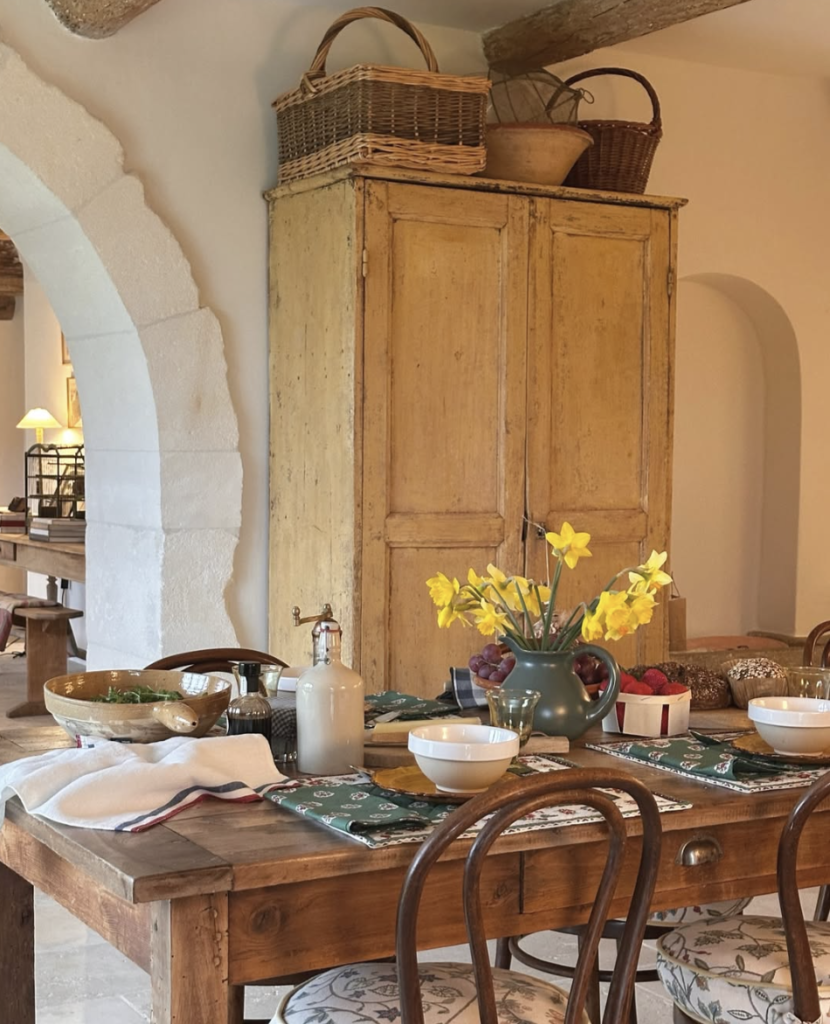
Decor that overlaps
Another thing you begin to notice is that the home does not feel divided into strict categories. In many modern interiors, rooms are shaped not only by function, but by expectation—a dining room feels polished, a mudroom purely practical, a bathroom minimal and restrained. Each space is kept within its role, and the objects within it are chosen accordingly.
But in homes that feel more timeless, this line begins to soften.
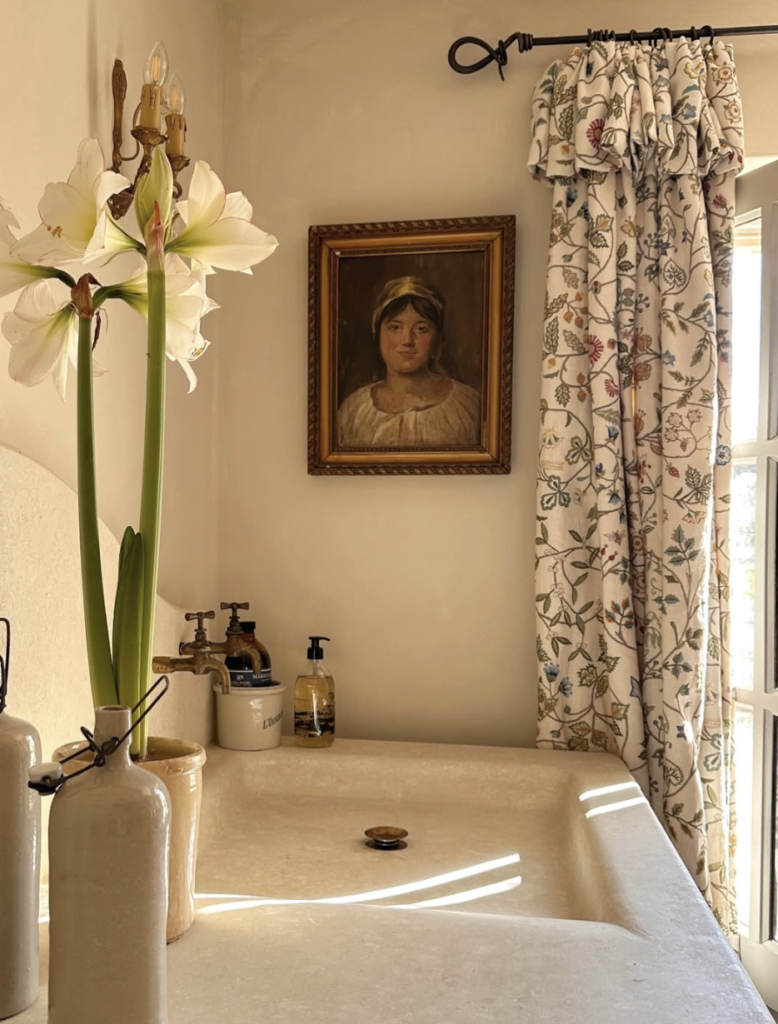
You might find something unexpectedly beautiful where it is not required—a painting resting quietly in a laundry room, or something simple and worn sitting comfortably in a more formal space. A kitchen may hold both the everyday and the delicate, without either feeling out of place.
Nothing feels arranged for effect. The home is not moving from room to room, but unfolding as one continuous life. And because of that, it feels more natural—less composed, and more deeply lived in.
Built on Permanence, Not Trend
Timeless homes tend to resist the pull of trend. Not because they are unaware of it, but because they are not built upon it. The foundation—muted tones, natural materials, and classic forms—remains steady. What changes is added gradually, without disrupting what is already there.
In contrast, trend-driven spaces often reflect broader cultural cycles. Styles shift quickly, and homes are updated to match them. What once felt current can begin to feel outdated within a few years, not because it lacks beauty, but because it was never meant to last.
When a home is built on what endures, it does not require constant reinvention. It deepens instead.
Returning to a Truer Sense of Home
This is not a call to replicate any one style, nor to reject everything modern design offers. It is simply an invitation to reconsider what we are building toward.
A home does not need to be finished in order to be beautiful. It does not need to be perfect in order to be worthy of being lived in. And it does not need to follow a trend in order to feel relevant.
What it requires is a sense of permanence, a respect for materials, and a willingness to let life shape it over time.
Because the homes that stay with us—the ones that feel both beautiful and grounding—are rarely the most polished. They are the ones that have been formed slowly, loved deeply, and allowed to become something real.